Why AI Is Denying More Prior Authorizations — And What Your Practice Can Do About It
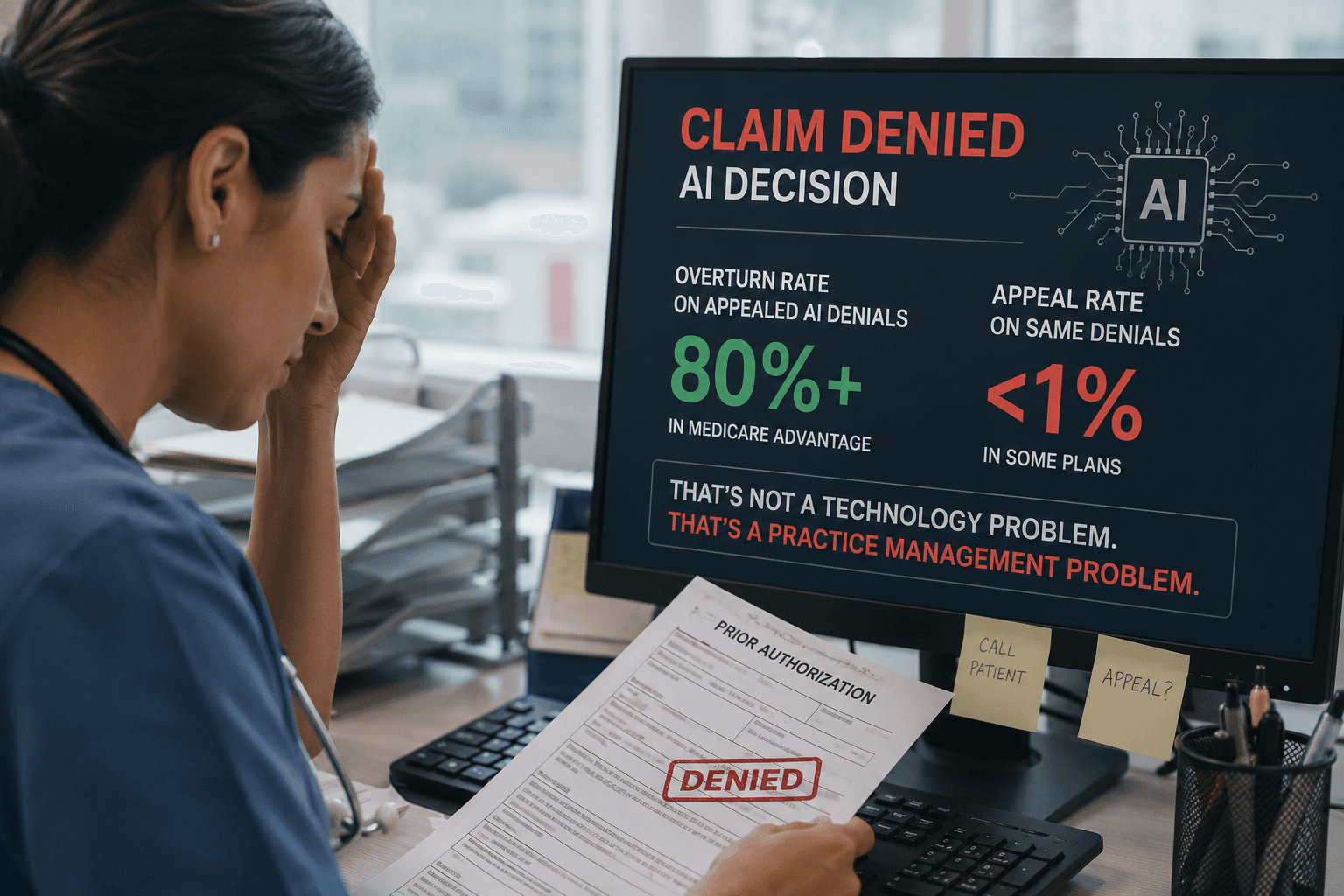
A practice manager submits a prior authorization for a lumbar MRI. Clean chart. Clear conservative-treatment history. The kind of case that should sail through. It's denied in under a minute — faster than any human reviewer could plausibly have read the file.
That's not a fluke. It's the new normal, and there's a specific reason for it: insurers have handed a growing share of prior authorization review to AI, and the physicians on the receiving end have noticed.
The stat behind the frustration
In the American Medical Association's most recent physician survey, 61% of physicians said AI is making prior authorization denials more frequent, not less. That's not an abstract worry — some payer-deployed AI systems have been documented producing denial rates up to 16 times higher than a human reviewer looking at the identical case.
The clearest public example is the ongoing class-action lawsuit against UnitedHealth Group over its nH Predict tool, used to review post-acute care claims for Medicare Advantage members. According to the plaintiffs' complaint, patients who appealed a denial generated by the tool won roughly nine times out of ten — while only about 0.2% of policyholders ever filed a challenge in the first place. A federal judge in Minnesota has allowed part of the case (breach of contract, and breach of the implied covenant of good faith and fair dealing) to proceed, and ordered UnitedHealth to turn over internal documents on how the tool works. UnitedHealth disputes the claims, and an Optum spokesperson has said "medical necessity determinations are made by qualified physicians following CMS guidance — not AI." The case is still working through discovery, so the full picture of how the tool was actually used internally isn't public yet — but the allegations, and the economics behind them, are worth understanding regardless of how the lawsuit resolves. American Council on Science and Health
Why the economics favor the insurer
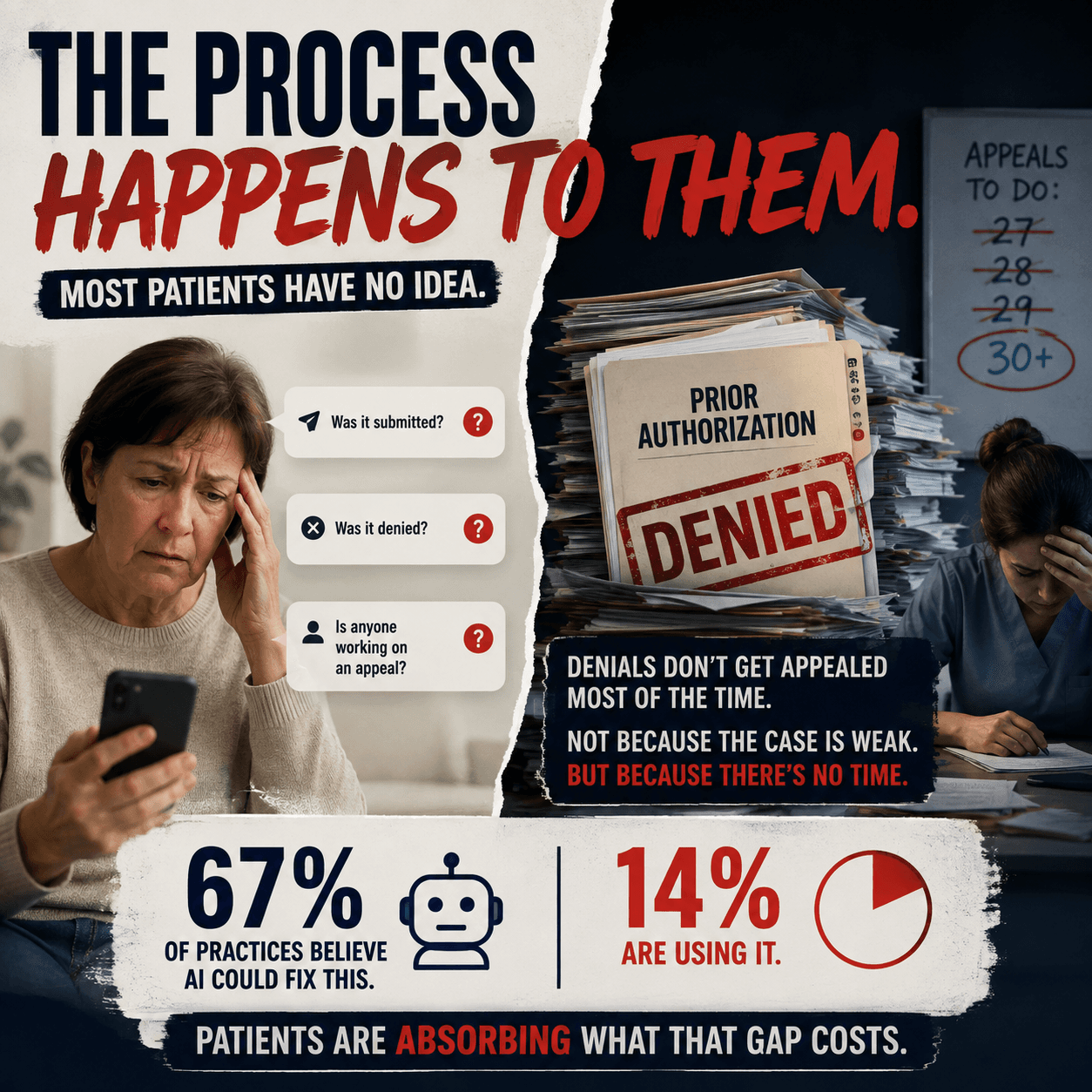
Here's the mechanism, in plain terms: an automated denial costs an insurer almost nothing to issue. A human-reviewed appeal costs a physician's staff real time — drafting a letter, gathering documentation, sometimes sitting on hold for a peer-to-peer call. If overturn rates on appeal are high (they are — Kaiser Family Foundation's analysis of Medicare Advantage data found a large majority of appealed denials are ultimately reversed) but appeal rates are low, the math works out in the insurer's favor even when the initial denial was wrong more often than not.
That's the actual asymmetry practices are up against. It isn't "AI versus doctors." It's an insurer's model reviewing thousands of claims an hour against a solo or small-group practice's front-desk staff writing one letter at a time — and knowing that most of those letters will never get written.
What's actually changed in the rules
Two regulatory shifts matter here, and neither is widely known yet at the practice level:
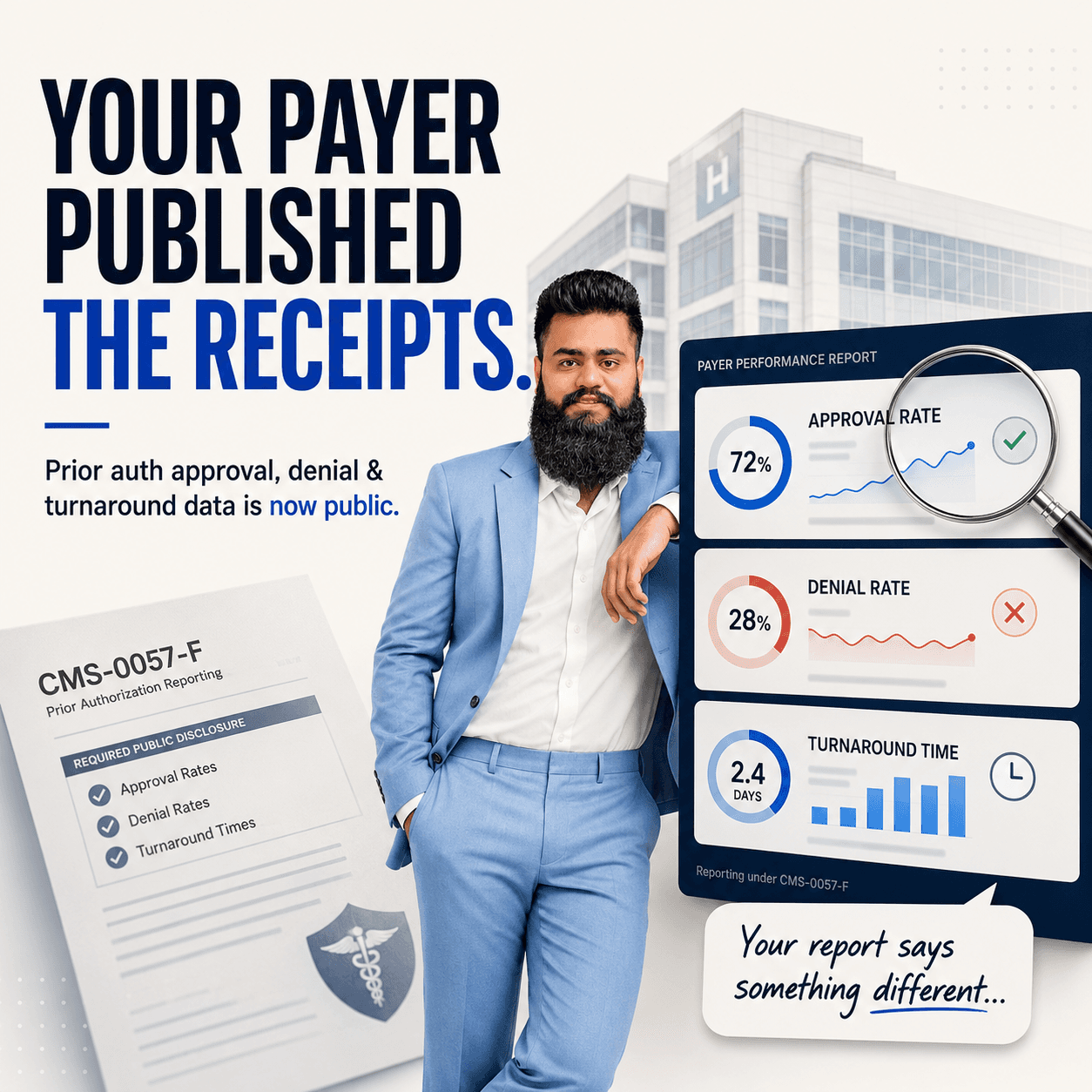
Faster deadlines. Under CMS's Interoperability and Prior Authorization Final Rule (CMS-0057-F), standard prior authorization decisions must come back within 7 calendar days — down from 14 — and expedited requests within 72 hours. If a payer is consistently blowing past those windows, that's a documented compliance gap, not just a frustration to absorb.
More disclosure. The same rule requires impacted payers to publicly report their approval and denial rates, along with average and median turnaround times. That data is new enough that most practices haven't looked at it yet for their own top payers — but it means, for the first time, a practice can actually check whether a payer's real-world behavior matches what it's required to disclose.
Neither rule directly addresses AI-driven denials. But together they give practices a deadline and a paper trail to point to that didn't exist a couple of years ago.
What to actually do with the next denial
Don't treat a denial as the final word. If the clinical picture is genuinely clear-cut, the base rates say an appeal is more likely to be right than the denial was.
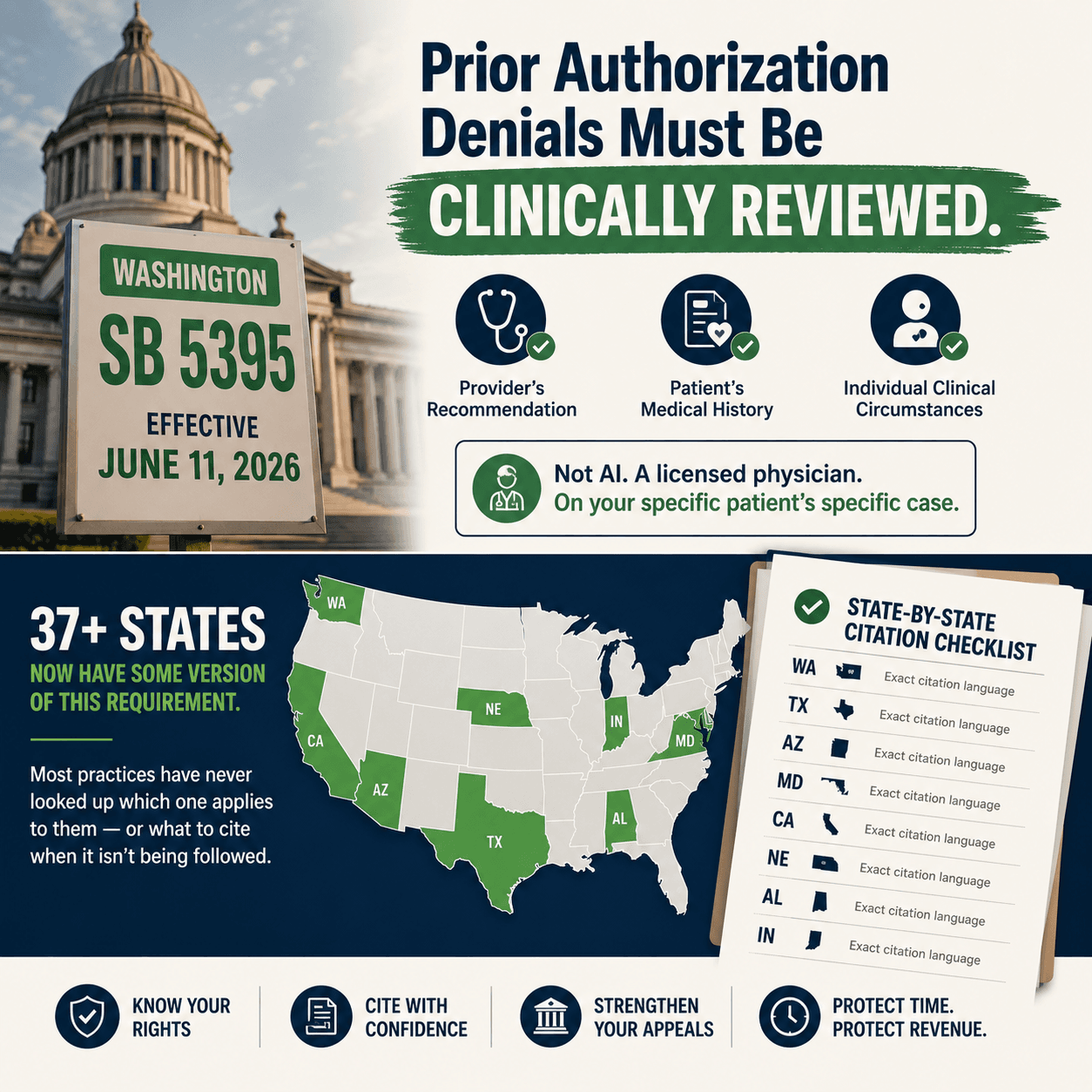
Ask what was actually cited. A denial should come with a specific reason tied to the payer's own coverage criteria — not a generic rejection. If it doesn't, ask for the specific citation in writing.
Cite the payer's own published criteria back, point by point. An independent analysis of a large sample of UnitedHealthcare appeals found meaningfully higher overturn rates when the appeal cited the payer's specific coverage-determination criteria directly, rather than arguing medical necessity in general terms. When a payer has no dedicated policy for a given imaging request, the American College of Radiology's Appropriateness Criteria is the accepted external standard to cite instead.
Track turnaround times against the CMS deadlines, not just against your own patience. A payer missing the 7-day/72-hour windows repeatedly is a pattern worth escalating, not a one-off to shrug off.
The part that's actually solvable
None of this requires a bigger staff. It requires making the letter-writing step — the actual bottleneck — faster than it currently is, so that appealing more of what deserves it doesn't mean adding hours to someone's week. That's the specific gap asaanbil.com's claims and appeals module is built around: appeal letters drafted directly from a denial notice, structured and criteria-cited the same way the original PA letter was, with a physician still reviewing and approving before anything goes out.
Payer AI isn't going away, and it isn't going to get gentler on its own. The practices that come out ahead over the next year won't be the ones with the flashiest tech — they'll be the ones that stopped letting a fast "no" be the end of the conversation.
Comments (0)
Sign in to like or comment.
No comments yet.