What Payer AI Actually Sees When It Reviews Your Chart

Most of what gets said about payer AI is either fear — "it's designed to deny you" — or hype — "it makes everything faster and fairer." Neither one actually explains what the system is doing. Here's the plain version.
What's actually happening when a payer's AI reviews your submission
According to a National Association of Insurance Commissioners survey, 84% of insurers now use AI or machine learning somewhere in utilization management, disease management, or prior authorization. That's not one tool — it's a mix of a few distinct technologies doing different jobs.
Natural language processing reads the clinical notes, orders, and labs in a submission and extracts the specific evidence the payer's checklist is looking for — essentially translating a chart into the payer's own criteria language automatically, without a person doing that translation by hand.
Machine learning risk-scoring takes that extracted evidence and predicts how likely the request is to eventually be approved, denied, or appealed, based on patterns learned from the payer's own historical claims data — not from fresh judgment about the specific patient in front of it.
Straight-through routing uses that risk score to sort submissions: low-risk, policy-conforming cases get processed automatically with minimal or no human review, while higher-risk or unusual-looking cases get flagged for a human reviewer to actually look at.
The part that actually matters for a practice
Here's the detail worth understanding clearly: the model isn't evaluating whether a specific patient needs a specific procedure. It's predicting how similar a submission looks to past submissions that were approved, denied, or appealed — based on patterns in the payer's own data, not fresh clinical reasoning applied case by case.
That means two genuinely identical clinical pictures can get treated differently if one submission happens to match a pattern the model associates with denial and the other doesn't — not because of anything wrong with the underlying clinical case, but because of how it was documented, structured, or coded on the page.
This is also why documentation structure matters more than it used to. A model trained on pattern-matching is, in a real sense, grading a submission on how closely it resembles a past approval — which makes citing a payer's specific published criteria, in the payer's own language, more than a formality. It's speaking the model's language directly, in the format it was trained to recognize.
Why this explains the AI-denial fear, without requiring bad intent
Insurers aren't necessarily building these systems specifically to deny more. Health Affairs has described this as an "arms race" dynamic — tools optimized for speed and internal consistency, deployed at scale, without every downstream effect on denial rates being fully anticipated or audited before rollout.
A system optimized to move fast and match historical patterns will, almost by construction, reproduce and sometimes amplify whatever patterns already existed in that historical data — including patterns that were previously masked by slower, more inconsistent human review that caught more edge cases individually.
That's a more useful way to think about this than "the AI is trying to deny you." The system doesn't need bad intent to produce worse outcomes at scale. It just needs to be very good at doing exactly what it was trained to do, quickly, without a person double-checking as many edge cases as before.
What this means practically
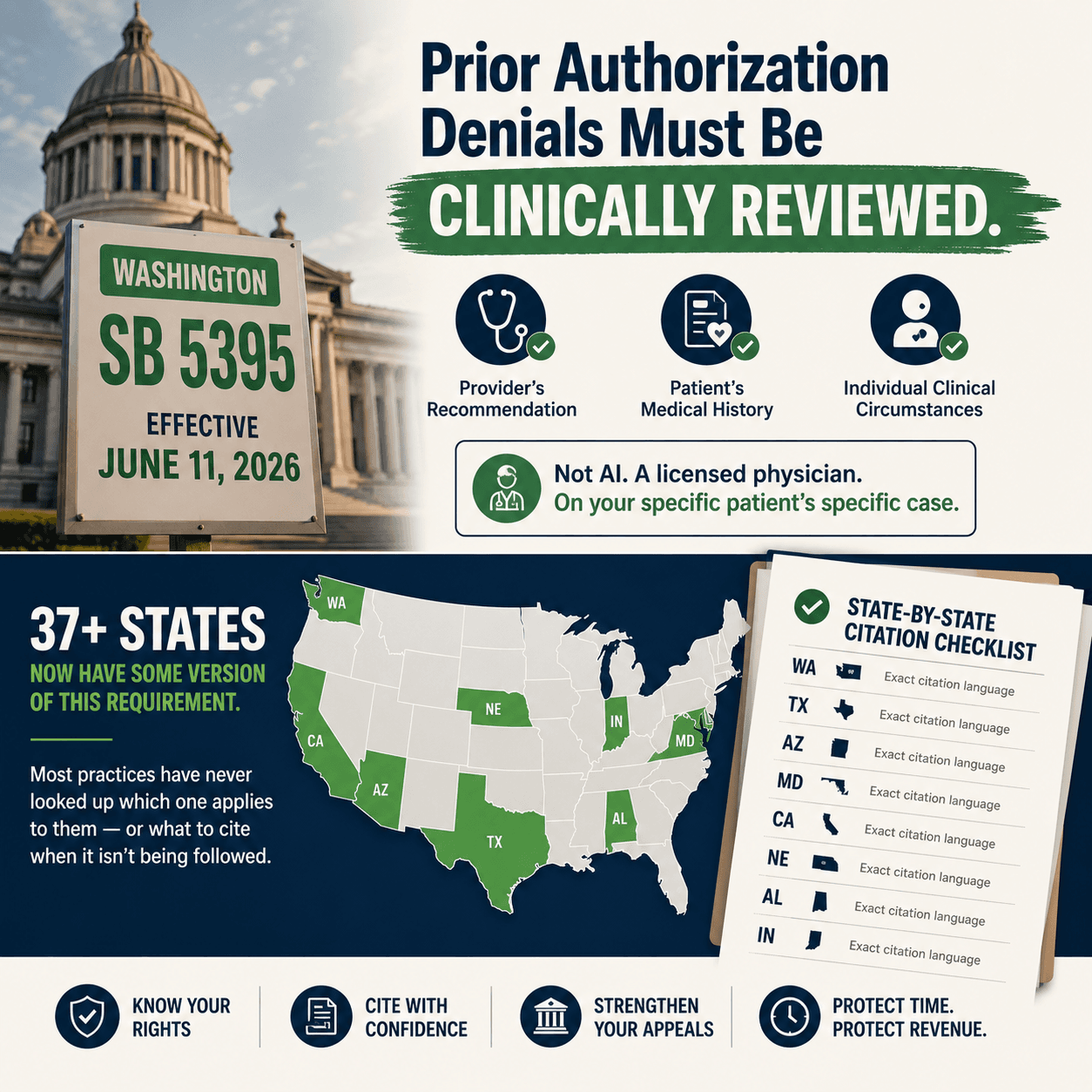
Structure and citation quality matter more, not less. If a model is pattern-matching against payer criteria, submissions that explicitly mirror that criteria's own language are more likely to route as clearly conforming rather than get flagged for additional scrutiny.
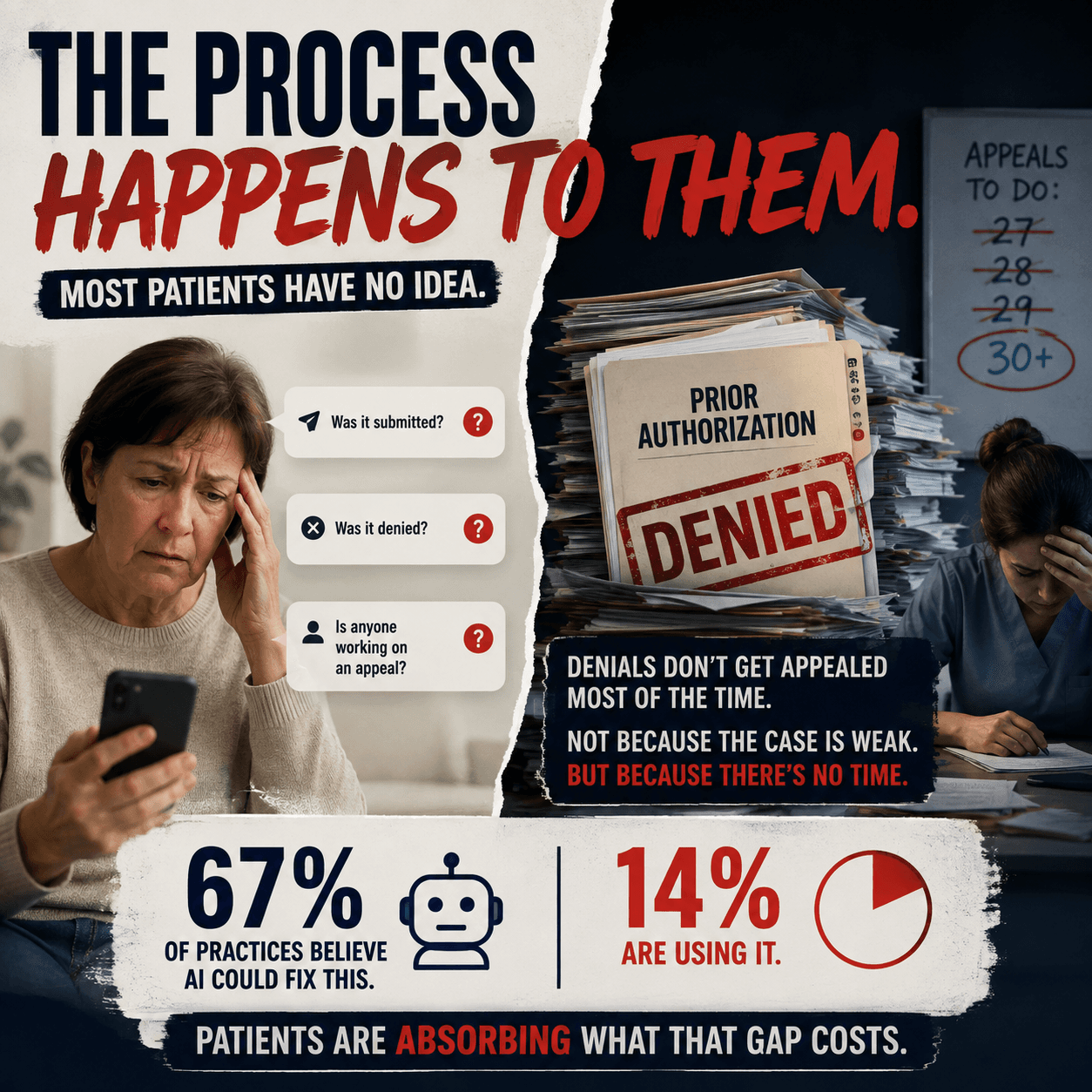
A denial isn't necessarily a considered judgment about a specific patient. It may be a pattern-match result rather than a deliberated decision. That's exactly why appealing is worth doing even when a denial feels confident — confidence and correctness aren't the same thing for a system built this way.
Consistency across submissions helps measurably. If a payer's model has learned what a strong submission for a given procedure typically looks like, an inconsistent format or a missing standard field makes a case look more like the pattern associated with denial, independent of the actual clinical merits underneath it.
The honest bottom line
Payer AI isn't a black box built specifically to say no to patients — but it's also not a neutral, careful clinical reviewer weighing each case on its own terms. It's a pattern-matching system optimized for speed and consistency with a payer's own historical data, and understanding that plainly is more useful than either fearing it reflexively or trusting it blindly.
Getting the structure and citation right on the first submission — speaking the model's language before it ever needs a second look — is exactly the kind of detail asaanbil.com's letter drafting is built around: structured, criteria-cited letters, with a physician still reviewing and approving before anything goes out. asaanbil.com (https://asaanbil.com)
Comments (0)
Sign in to like or comment.
No comments yet.