The Prior Authorization Software Gap No One's Selling You

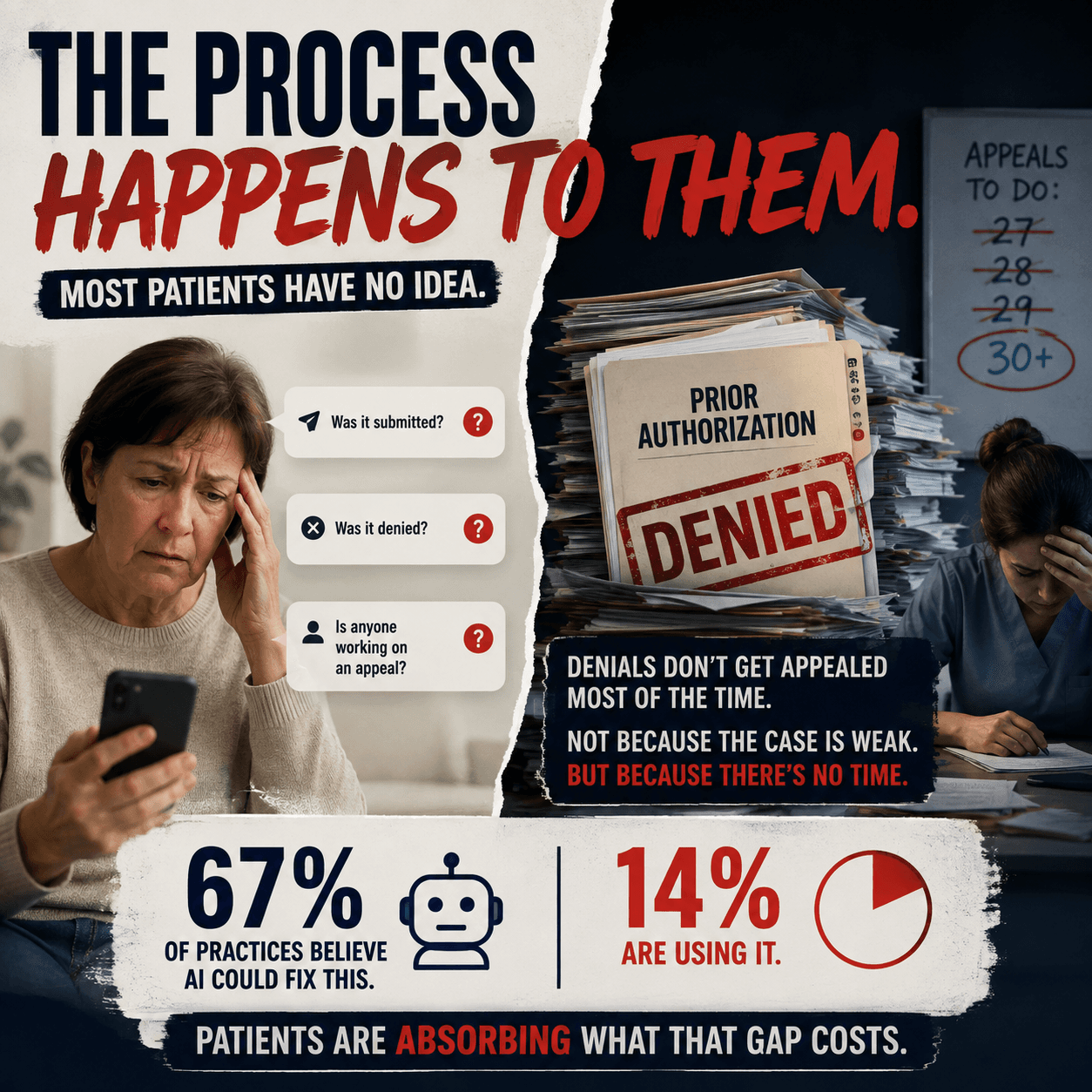
Forty-two prior authorizations sitting in the inbox. Thirteen hours a week your staff spends on them. And the one person who handles it all just called in sick.
If you've gone looking for software to fix that, you've probably noticed something odd: everything on the market seems built for someone else's practice.
The market is split into two extremes
On one end: free tools. CoverMyMeds processes more than 43 million prior authorizations a year and connects to over 600 health plans — genuinely useful infrastructure, funded by pharmacy and PBM partnerships rather than billed to your practice. The catch is scope: it's built for pharmacy and medication PA. If most of your submissions are imaging, surgical, or procedural, it doesn't cover what you actually need.
On the other end: enterprise platforms. Cohere Health, Availity's AuthAI, Optum's Digital Auth Complete, Waystar's Auth Accelerate, Myndshft's enterprise tier — genuinely capable systems, built for health systems and large groups with dedicated IT teams, EHR integration budgets, and procurement processes a 1-10 physician practice doesn't have. Several of these platforms don't even publish pricing; it's quoted per-organization based on volume and integration scope.
In between those two extremes is almost nothing built specifically for a solo or small-group specialty practice.
The math that actually matters
One industry review put the core tradeoff plainly: a practice isn't going to fix AI-driven denials with manual fax workflows, but it's also not going to sign a $2,000-a-month enterprise contract it can't justify on its own volume. The right tool has to earn its cost at your scale, with your payer mix — not a hospital system's.
That's the actual decision every independent practice is stuck making right now: absorb the burden manually, or overpay for infrastructure sized for someone ten times your size.
Why payer-side AI raises the stakes
This gap would matter less if the other side of the transaction hadn't gotten faster. It has. Payers are increasingly running prior authorization review through their own AI systems — and physicians have noticed. 61% of physicians say AI is making denials more frequent, not less, and some payer-side systems have been documented producing denial rates running well above what a human reviewer would produce on the same case.
Meanwhile, most independent practices are still working the queue the way they always have: one staff member, one submission, one fax at a time. A software fight between a payer's automated review system and a practice's manual workflow isn't a fair one — regardless of how strong the practice's clinical documentation actually is.
What's changed on the regulatory side
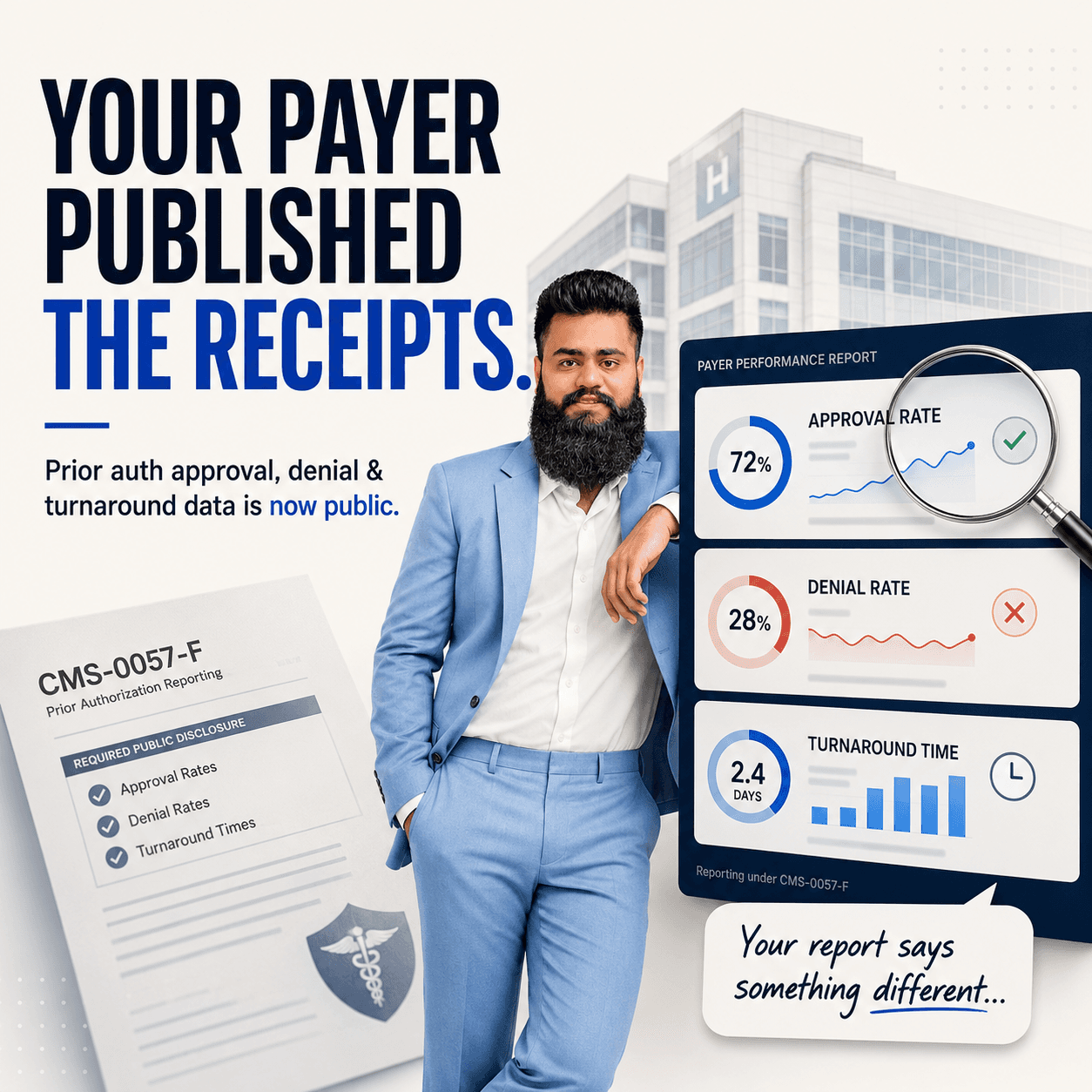
The CMS Interoperability and Prior Authorization Final Rule (CMS-0057-F) took effect January 1, 2026, and it changes the baseline every practice should expect from every payer:
- Standard prior authorization decisions must come back within 7 calendar days, down from 14
- Expedited requests must come back within 72 hours
- Payers must adopt standardized electronic data exchange, with FHIR API compliance required by January 2027
- Payers must publicly report approval rates, denial rates, and average turnaround times
None of this closes the software gap for small practices. But it does mean any tool worth buying should already be building toward FHIR compliance, and any payer worth billing should be measurably faster than it was two years ago.
What to actually check before buying anything
- Ask what the tool was originally built for. A platform scaled down from enterprise use often keeps enterprise-shaped assumptions — required EHR integration, per-seat or per-transaction enterprise pricing, features sized for a health system's volume.
- Confirm your actual payer mix is covered. A tool built around pharmacy PA won't help with imaging, surgical, or specialty-drug prior auth criteria — check that the citation logic matches what you actually submit.
- Check whether pricing scales with your real volume. A platform priced for hundreds of monthly PAs doesn't make financial sense for a practice submitting a few dozen.
- Ask directly whether EHR integration is required to function. If yes, factor in the real implementation timeline and IT support that requires — some vendor implementations run three to six months — not just the sticker price.
- Confirm the vendor is building toward FHIR R4 / CMS-0057-F compliance ahead of the January 2027 deadline, not treating it as optional.
The honest bottom line
This gap isn't permanent — it's just an underserved segment nobody's built for specifically yet. Independent practices don't need enterprise-scale software, and a medication-only free tool won't cover the rest of what they submit. What they need is something sized for their actual procedure mix, their actual payer mix, and their actual volume — priced accordingly.
That's the specific space asaanbil.com is built to occupy: no EHR integration required, pricing built for a single-location practice, and letter drafting matched to the specific procedures and payers a specialty practice actually handles. Free pilot, no card required: asaanbil.com (https://asaanbil.com)
Comments (0)
Sign in to like or comment.
No comments yet.