The Denial You Don't Notice: AI-Driven Downcoding
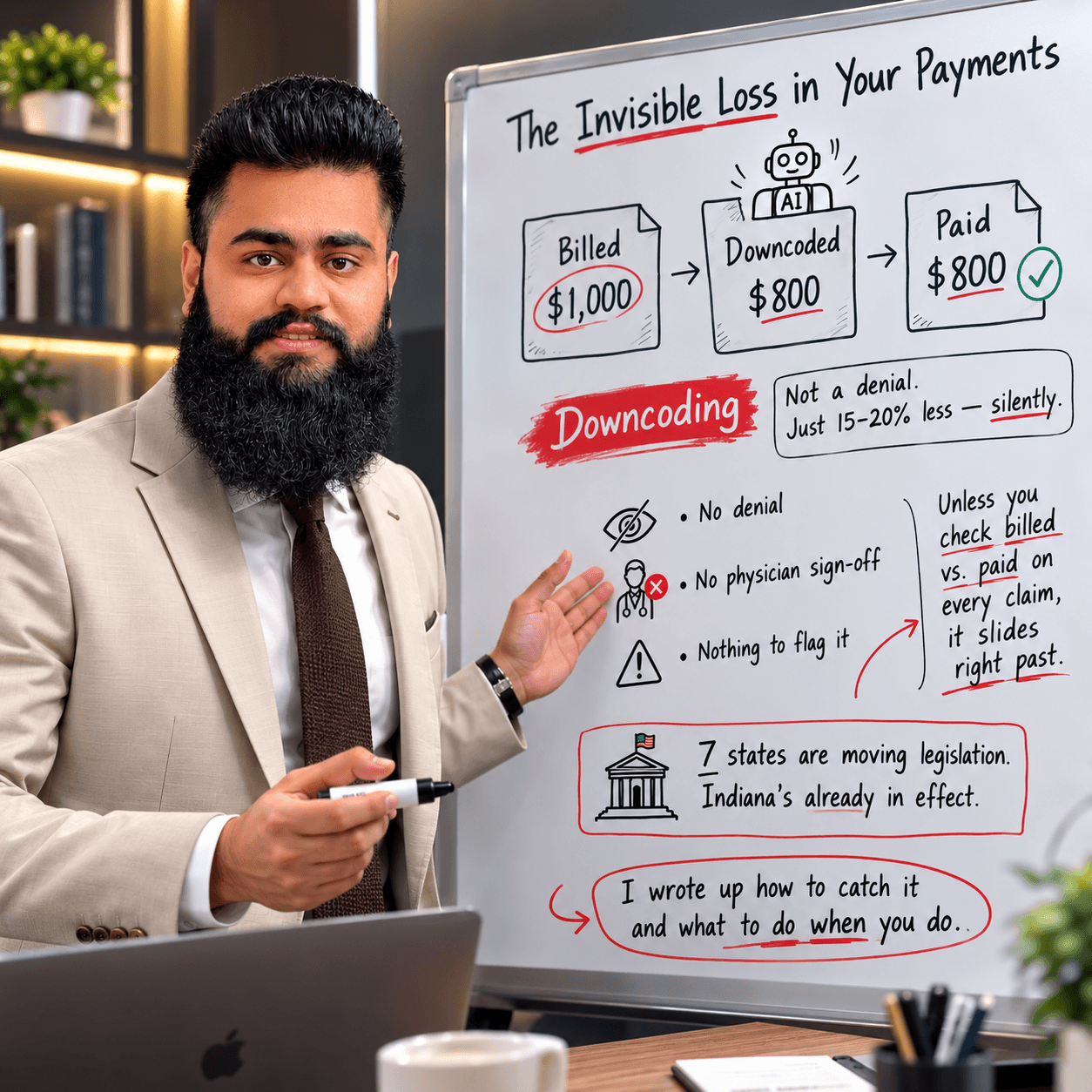
A claim gets paid. Not denied — paid. Just less than it should have been, and nobody flagged why.
That's not a billing error. Increasingly, it's a deliberate algorithm doing exactly what it was built to do.
The denial you don't notice
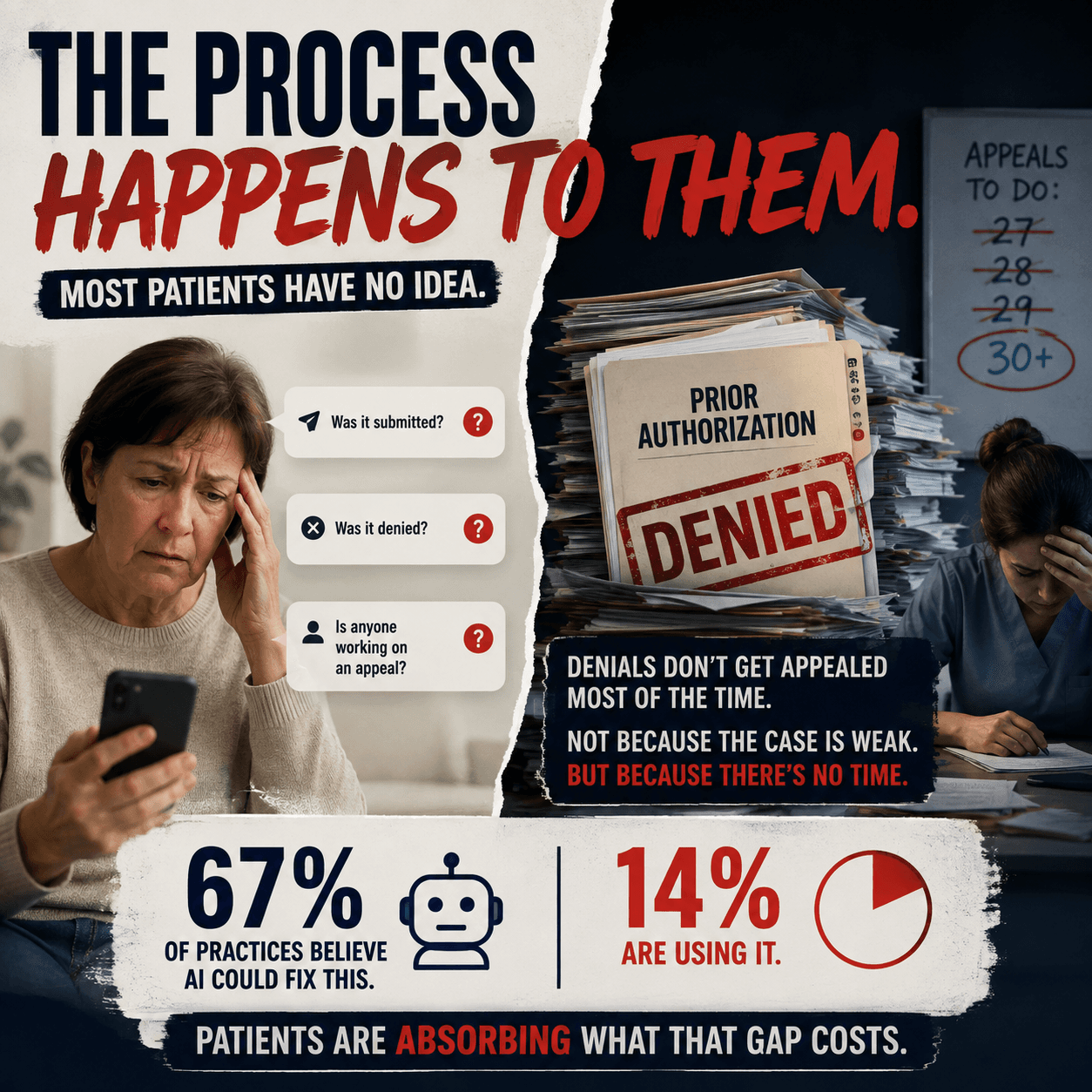
Most of the conversation around payer AI focuses on outright denials — the request that comes back rejected in under a minute. There's a quieter version of the same problem that's easier to miss entirely: AI-driven "downcoding," where an insurer's algorithm automatically reduces what a claim pays out, without ever issuing a denial or requiring a physician to sign off on the change.
A denial gets attention immediately — zero payment is an obvious gap to investigate. A claim that pays 15-20% less than billed, silently, often doesn't get the same scrutiny, especially at a practice without a dedicated billing analyst cross-checking every payment against every submission line by line.
Why this is spreading now
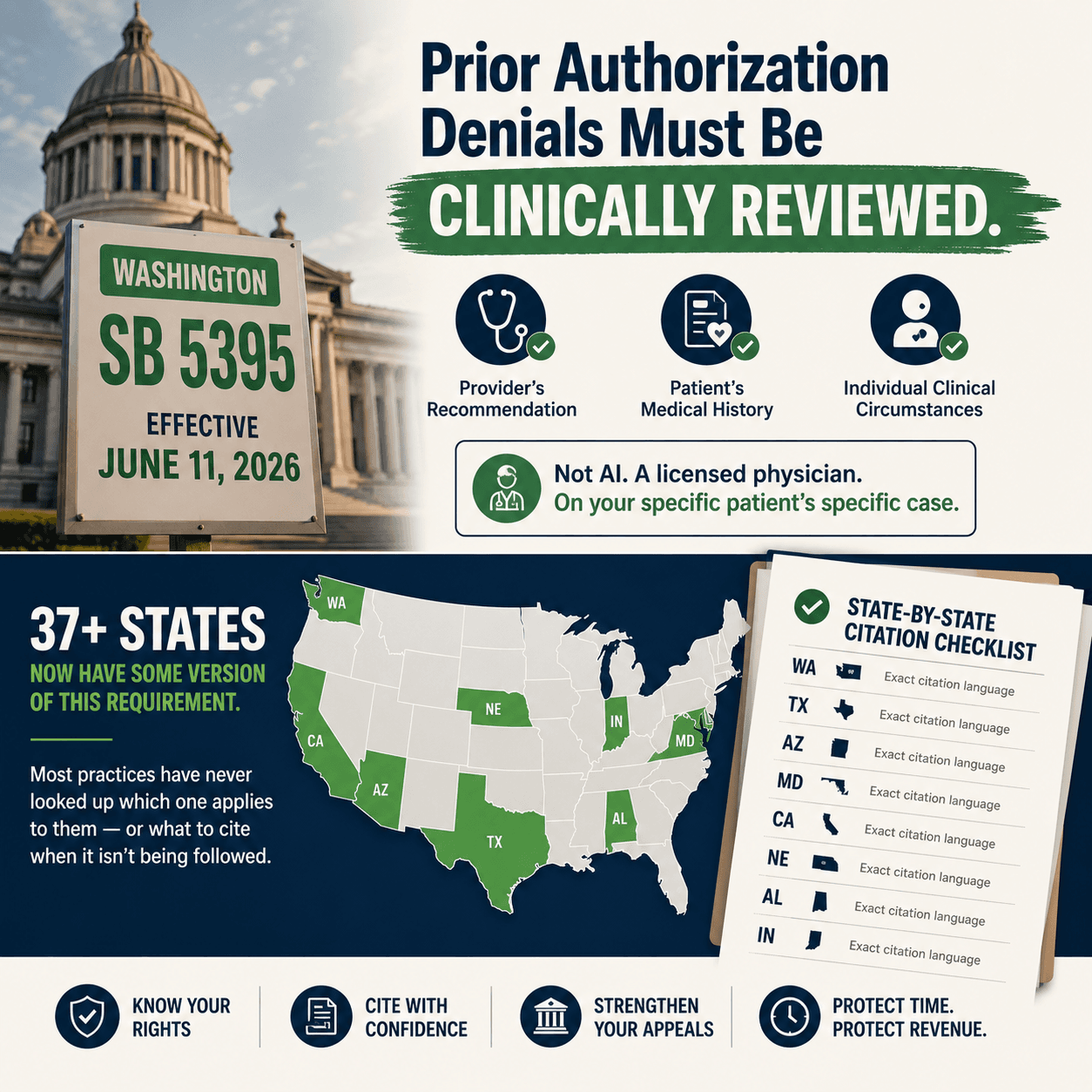
Bills addressing AI-driven claim downcoding without physician oversight are moving through seven states in 2026: California, Connecticut, Illinois, Indiana, Maryland, Missouri, and Oregon. Indiana's version already took effect July 1, 2026 — the first state where this is now settled law rather than a pending proposal.
The pattern lawmakers are responding to is consistent across these bills: an algorithm reviews a submitted claim, applies its own judgment about what the coding "should" have been, and adjusts payment down — all without a physician reviewing whether that judgment was actually correct for that specific patient and case.
Why this is harder to catch than a denial
A denial produces a clear, unmissable signal. Downcoding produces a partial payment that looks, at a glance, like the claim simply went through as normal. Unless someone is actively comparing what was billed against what was paid, on every claim, the gap is easy to absorb as routine variance rather than catch as a deliberate pattern.
That's precisely why it's spreading as a mechanism. It produces savings for the payer with far less visibility and far less pushback than an outright denial generates, because most practices' review processes are built to catch zero-payment claims, not partial-payment ones.
What to actually do about it
Compare billed amount to paid amount on every claim, not just denials. A downcoded claim doesn't trigger the same review reflex a denial does — it has to be checked for on purpose, as a standing habit rather than an exception process.
Track downcoding patterns by payer and by CPT code. A single instance might be a legitimate coding correction that genuinely reflects what was documented. A repeated pattern on the same code from the same payer is a different, more deliberate story.
Check whether your state is one of the seven moving legislation, and whether it's already in effect. Indiana practices, in particular, now have a live legal standard to point to rather than a general grievance.
Push back on downcoded claims the same way you would a denial. Request the specific rationale for the payment reduction in writing — the same instinct that works for vague denials applies just as directly here.
The part worth acting on now
Denials get the headlines because they're visible. Downcoding is quietly doing similar economic work with far less scrutiny, and most practices aren't checking for it yet, because it doesn't look like a problem on the surface — it looks like a claim that simply paid a little light.
Tracking payer patterns, flagging discrepancies, and drafting pushback on both denials and underpayments is exactly the kind of detail-dependent work asaanbil.com's claims and appeals module is built to speed up — structured, criteria-cited letters with a physician still reviewing and approving before anything goes out. asaanbil.com (https://asaanbil.com)
Comments (0)
Sign in to like or comment.
No comments yet.