82% of Doctors Are Now Employed — Here's the Number That Explains Why

Eight years ago, more than 270,000 physicians ran their own practice. Today it's 120,900 — a drop of over 150,000, and the pace hasn't slowed.
82% of practicing doctors are now employed by a hospital or corporate entity, according to Avalere Health data compiled for the Physicians Advocacy Institute. That's not a slow drift. It's a new high, tracked every year since 2018, and it keeps climbing.
The number that actually explains it
Here's the mechanism behind the trend, and it's more concrete than "hospitals have more resources." The exact same low-risk procedure can pay 5 to 12 times more when billed through a hospital outpatient department than through an independent physician's own office.
That's not a rounding error in the reimbursement system. It's a structural gap that lets a hospital outbid an independent practice for its own physicians — not because the hospital delivers better care for that procedure, but because the payment system rewards the exact same work dramatically more once it happens inside hospital walls.
Rural practices are absorbing this hardest. 80.2% of rural physicians are now employed, and roughly two-thirds of rural practices are no longer physician-owned at all.
The part that complicates the obvious story
Here's what should give anyone pause before assuming consolidation is simply "better for everyone": independent-practice physicians consistently report lower burnout and higher job satisfaction than hospital-employed physicians. In one recent survey, 42% of hospital-employed physicians said they'd considered switching back to private practice.
That's a real tension. Physicians aren't, on the whole, choosing employment because it makes their working life better. The reimbursement system is pulling practices toward consolidation regardless of what physicians (or, often, patients) would actually prefer — and independent practices are absorbing the full cost of resisting that pull.
Why this matters even if you're staying independent
If your practice isn't going anywhere, this data still has two direct implications:
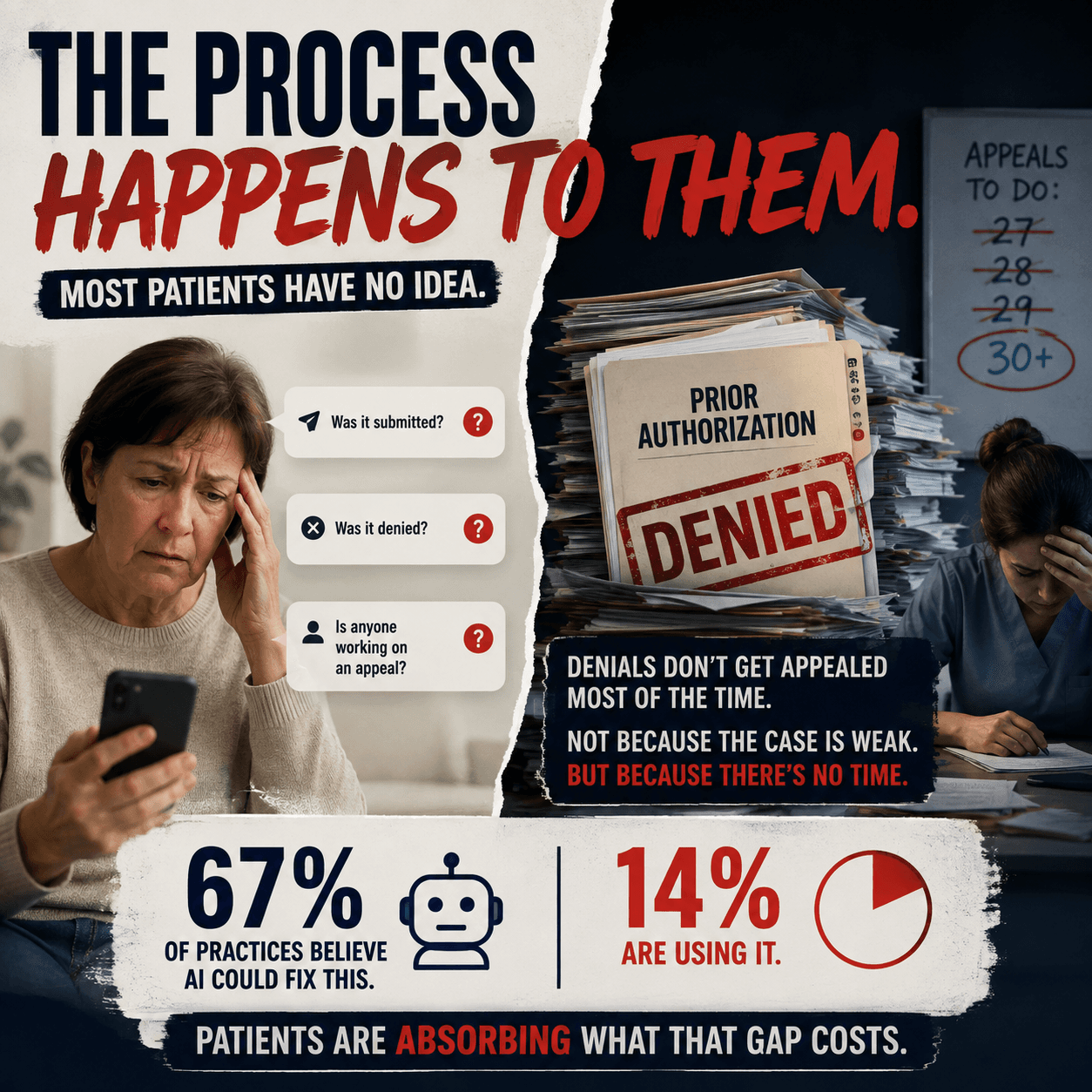
Every dollar of administrative overhead costs more, relatively, for you than it does for a hospital system. A hospital absorbing rising denials or prior authorization burden has a dedicated claims team and a reimbursement cushion an independent practice doesn't have. The identical administrative burden lands harder on a smaller operation with fewer people to spread it across.
Recruiting and retention math has shifted. If a hospital can offer a physician meaningfully more compensation for the same clinical work, staying independent increasingly means competing on something other than raw pay — autonomy, burnout, patient continuity, control over how care actually gets delivered.
What independent practices that are surviving this are actually doing
A few patterns show up repeatedly in how independent practices are staying independent on purpose, not by default:
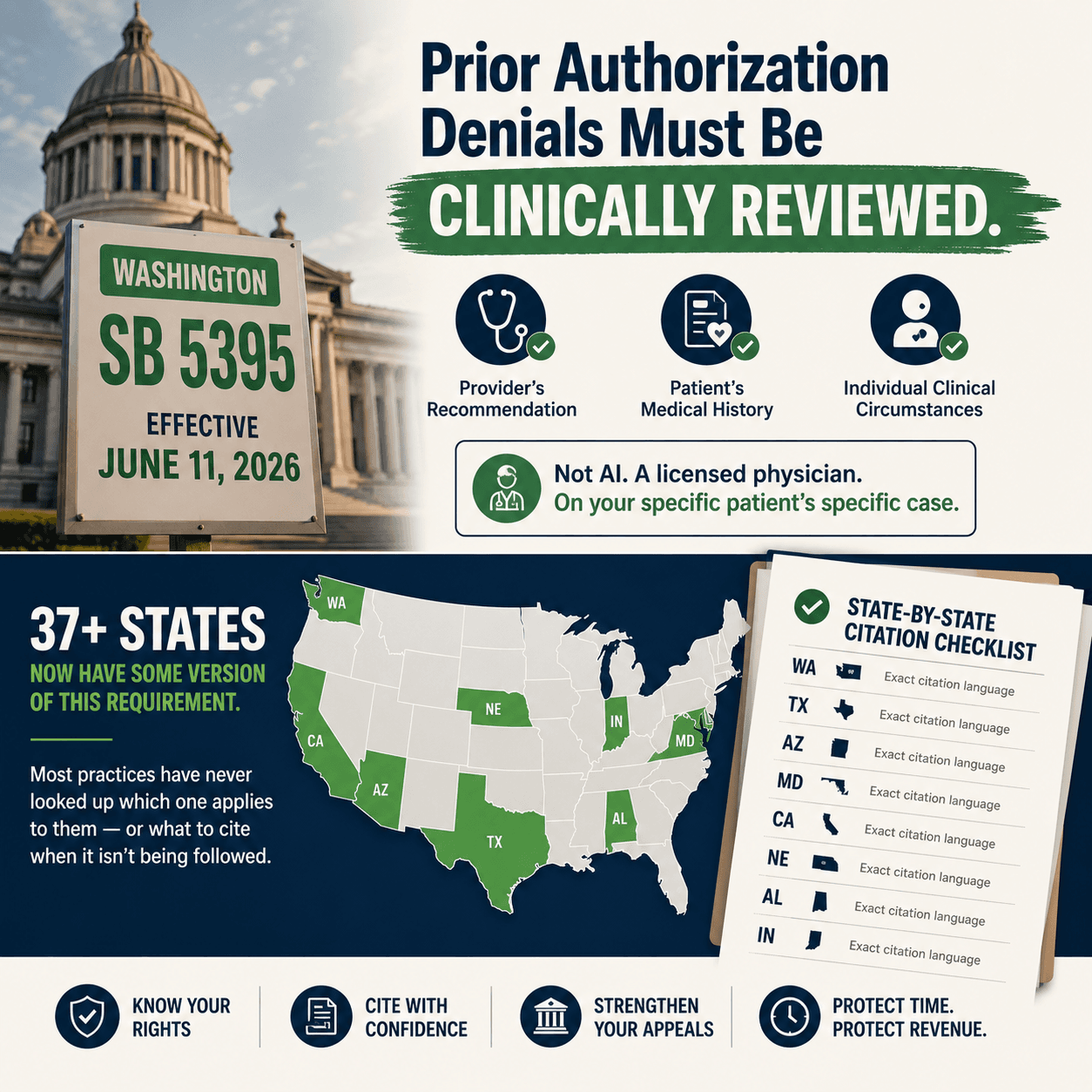
They treat administrative efficiency as a genuine margin lever, not just an annoyance. Every hour not spent on prior auth paperwork or appeals is an hour that goes back into patient volume or physician bandwidth — and at independent-practice scale, that hour is worth proportionally more than it is at a hospital system.
They lean into what employment can't offer. Lower burnout and higher satisfaction aren't just nice statistics — they're a genuine recruiting argument against a bigger paycheck, especially with more hospital-employed physicians reporting they'd consider leaving.
They watch reimbursement policy, not just clinical trends. The site-of-service payment gap is a named, actively debated problem in health policy circles, with federal legislation aimed at narrowing it under discussion. A policy shift here would matter more to an independent practice's long-term viability than almost any clinical trend in the news.
They stop treating every administrative burden as a fixed cost. Prior authorization, appeals, and claims management scale worse for a small practice than a large one — which makes fixing them disproportionately valuable at independent-practice size, not just a nice-to-have efficiency project.
The honest bottom line
The economics are genuinely working against independent practice right now, and no single article changes the underlying reimbursement gap. But the physicians choosing to stay independent aren't wrong that it's worth defending — the burnout and satisfaction data backs them up clearly. The practical fight is making sure administrative overhead doesn't quietly finish what the reimbursement gap is already trying to start.
That's the specific piece of the fight asaanbil.com is built to help with — letter and appeal drafting sized for an independent practice, so the administrative side of staying independent doesn't cost more time than it has to. asaanbil.com (https://asaanbil.com)
Comments (0)
Sign in to like or comment.
No comments yet.