26% of Physicians Say Prior Authorization Caused a Serious Adverse Event
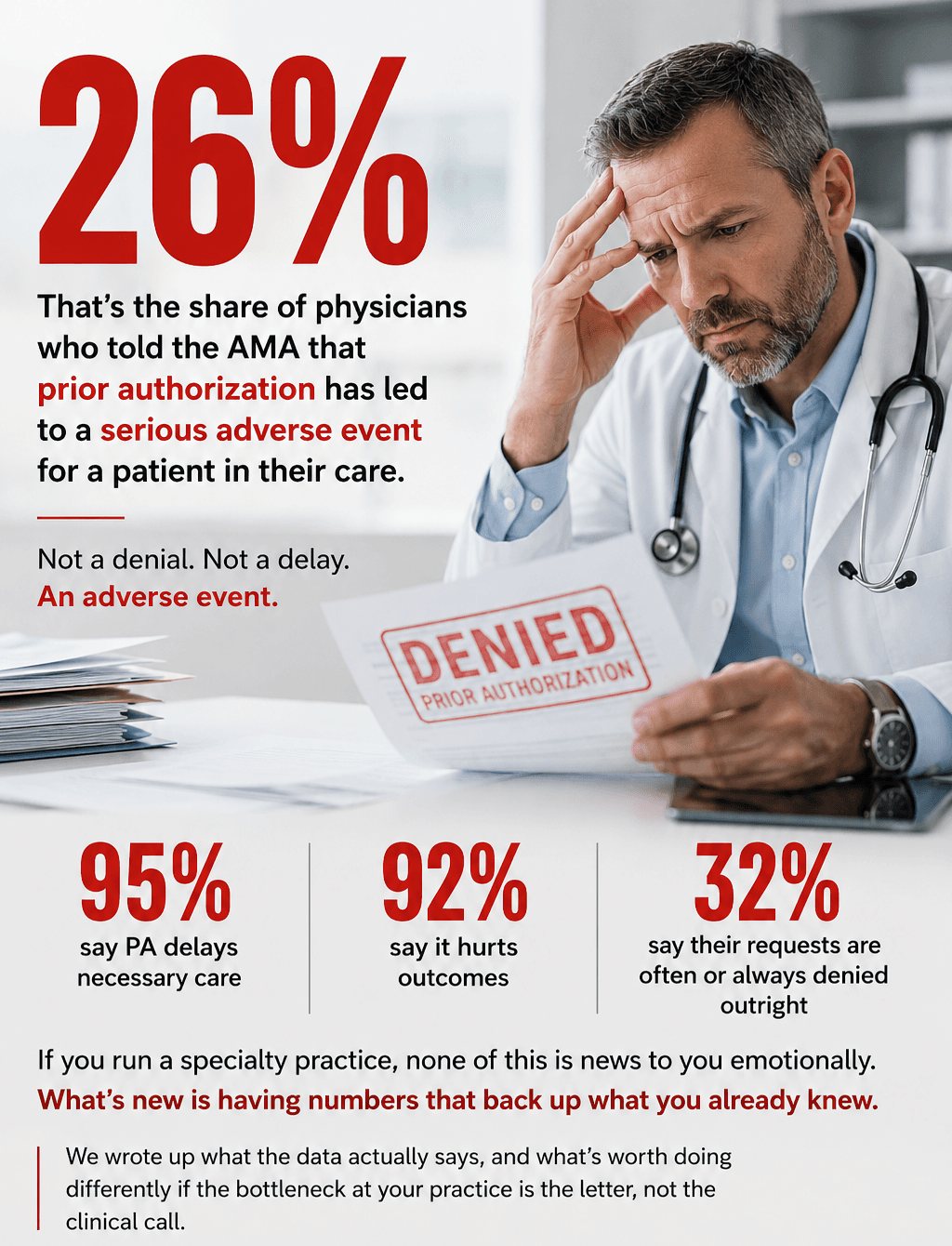
For years, prior authorization has been talked about as an efficiency problem — a source of burnout, wasted hours, and frustrated staff. New data from the American Medical Association makes clear that framing understates what's actually happening. In its 2026 Prior Authorization Physician Survey, released in May, the AMA found that more than one in four physicians — 26% — report that prior authorization has led to a serious adverse event for a patient in their care, including hospitalization, a life-threatening event, permanent impairment, or death.
That's not a statistic about paperwork. It's a statistic about harm.
The pledge that hasn't changed the numbers
The timing of this survey matters. In June 2025, roughly 60 health insurers publicly pledged to streamline and reduce prior authorization requirements, with implementation deadlines running through 2027. The AMA surveyed 1,000 practicing physicians ahead of the first major deadline to check whether that pledge was translating into real change on the ground.
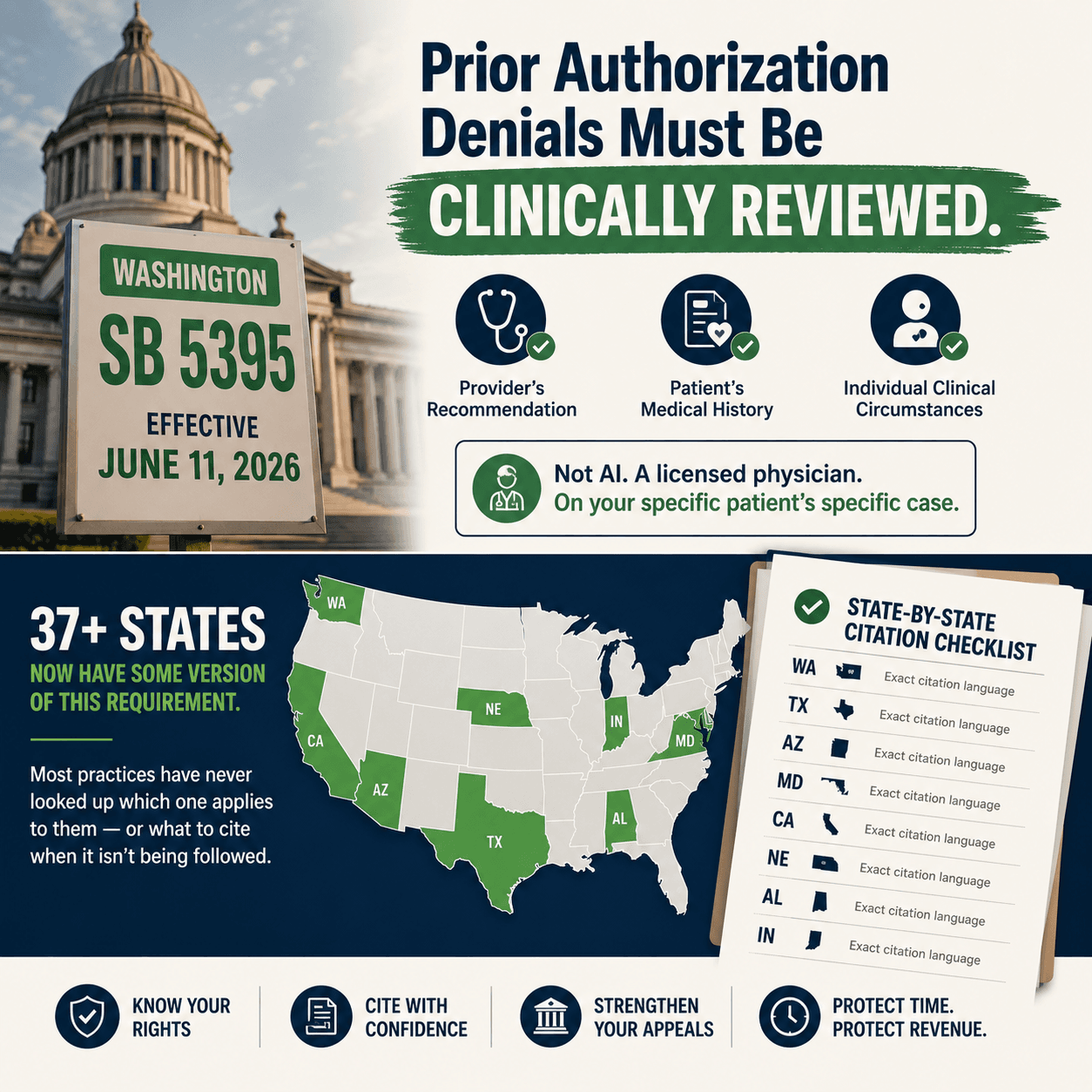
The answer was skepticism backed by experience. Only 33% believe the pledge will make a meaningful difference. Part of the reason: insurers specifically committed that medical necessity denials would be reviewed by a licensed, qualified clinician — but only 24% of physicians say that's consistently happening. Among physicians who participate in peer-to-peer reviews, just 16% say the health plan representative on the other end of the call often or always has the appropriate clinical qualifications to be making that call.
In other words, the review process that's supposed to be a clinical safety check is, by physicians' own account, frequently not staffed by someone qualified to make a clinical judgment.
The numbers behind the reframe
The AMA's full 2026 findings paint a consistent picture, not an outlier statistic:
- 95% of physicians say prior authorization delays access to necessary care
- 92% say it negatively affects clinical outcomes
- 79% report that patients abandon treatment entirely because of authorization struggles
- 32% say their requests are often or always denied outright
- 74% say denial rates have risen over the past five years
Physicians report completing an average of 40 prior authorizations per week, consuming roughly 13 hours of physician and staff time — and 40% of practices now employ staff whose job exists solely to handle prior authorization. This isn't a story about occasional friction. It's a description of a process that has become a fixed, expensive, and increasingly risky part of running a practice.
The burden also isn't evenly spread across payers. Physicians rated UnitedHealthcare as the highest-burden insurer (75% reporting "high" or "extremely high" burden), followed by Humana (65%), Anthem/Elevance (61%), Aetna (61%), Cigna (59%), and Blue Cross Blue Shield (56%) — useful context if you're trying to figure out where to focus your own documentation effort first.
The part that gets less attention: most winnable appeals never get filed
Separate from the AMA's physician survey, a January 2026 KFF analysis of CMS data on Medicare Advantage prior authorization tells a related but distinct story. Insurers made nearly 53 million prior authorization determinations in Medicare Advantage in 2024, denying 7.7% in whole or in part. Of those denials, only 11.5% were ever appealed.
Here's the number that should change how a practice thinks about denials: of the appeals that were filed, 80.7% were fully or partially overturned. That rate has held above 80% every year from 2019 through 2024.
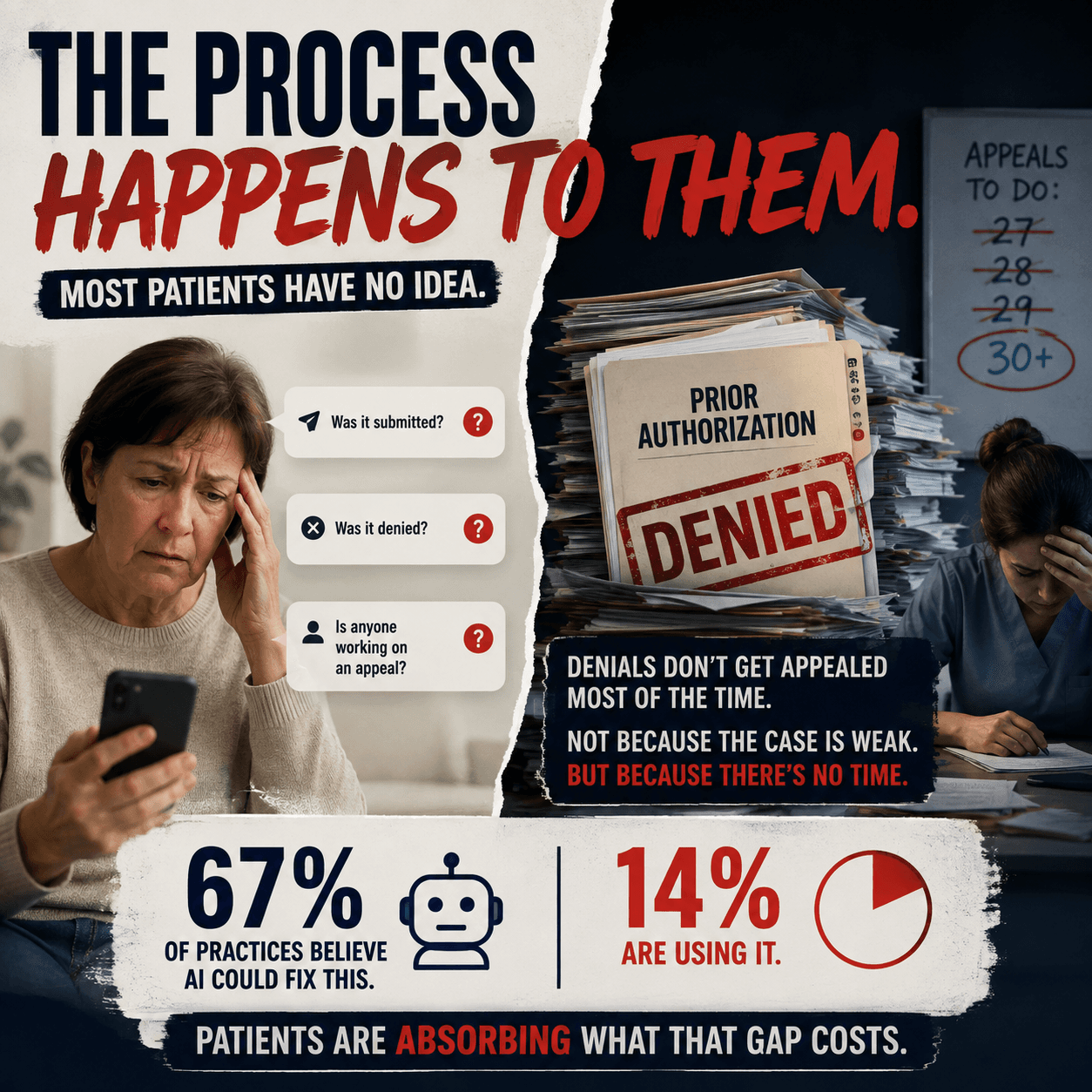
Put those two numbers together and the picture is stark: the overwhelming majority of denied requests are never appealed, and the small share that are appealed are overturned more than four times out of five. That gap represents care a physician had already judged necessary, that an insurer initially denied, and that — when someone had the time to push back with the right documentation — was approved anyway. The difference between "denied" and "approved" in a large share of these cases wasn't the clinical facts. It was whether anyone had the bandwidth to file the appeal.
For a solo or small specialty practice without a dedicated prior-auth team, that bandwidth gap is exactly where the most preventable harm sits.
What the new federal rule changes — and what it doesn't
CMS's Interoperability and Prior Authorization Final Rule (CMS-0057-F) took effect operationally on January 1, 2026, and it directly targets some of what's described above. Under the rule, impacted payers — Medicare Advantage organizations, state Medicaid and CHIP programs, Medicaid managed care plans, CHIP managed care entities, and qualified health plan issuers on the federal exchanges — must now:
- Decide standard prior authorization requests within 7 calendar days, down from timelines that ran as long as 14 days at many payers
- Decide expedited (urgent) requests within 72 hours
- Provide a specific reason for any denial, regardless of whether it's communicated by portal, fax, email, mail, or phone
Those are real, meaningful changes. But the rule has limits worth knowing before you assume it covers your situation. It doesn't apply to prior authorization for prescription drugs. It doesn't apply to commercial insurance plans outside the federal exchanges. And the more ambitious piece — a standardized, API-based system for submitting and tracking requests electronically — isn't required to be operational until January 1, 2027, a full year after the timeline requirements took effect.
For a practice dealing mostly with commercial payers or drug prior authorizations, this rule may not move the needle much yet. The AMA's survey — taken after the rule's initial requirements were already in effect — is a reasonable signal that the timeline changes alone haven't fixed the underlying problem for physicians on the ground.
What a specialty practice can actually do with this
- Separate denials by reason, not just by payer. A denial for missing documentation is a different problem than a denial the payer is genuinely disputing on medical necessity grounds — and it needs a different response.
- Default to appealing, not accepting. With an 80.7% overturn rate on appealed Medicare Advantage denials, treating "denied" as final is very likely leaving recoverable, medically necessary care on the table.
- Write to the payer's specific criteria, not just the chart note. A letter that explicitly cites the payer's own published medical-necessity criteria is a structurally different document than one that restates the diagnosis and hopes it's convincing. This is the single biggest lever most practices aren't using.
- Track your own near-misses. If a delayed authorization has ever pushed a patient's care past a point that mattered clinically, log that separately from your routine denial rate — it's the number that actually reflects risk.
- Know which payers are worth the extra documentation time. If UnitedHealthcare, Humana, and Anthem/Elevance are consistently your highest-friction payers — as they are nationally — build your most thorough letter templates around them first.
The honest bottom line
The AMA's physician survey and KFF's analysis of appeal outcomes are telling the same story from two different angles: a meaningful share of prior authorization denials are wrong, in the sense that they get reversed once someone has time to push back with the right documentation — and in a meaningful share of cases, the delay itself does real harm before that reversal ever happens. For a solo or small-group specialty practice without a dedicated prior-auth team, the constraint usually isn't clinical judgment. It's time to write the letter the way a reviewer needs to see it, and time to file the appeal that's statistically very likely to work.
That's the specific gap asaanbil.com is built to close — AI-drafted prior authorization and appeal letters that cite the payer's own criteria directly, reviewed and approved by a human before anything goes out, with no EHR integration required. Free pilot, 10 letters, no card required: asaanbil.com
Sources: American Medical Association, 2026 Prior Authorization Physician Survey (released May 13, 2026); KFF, "Medicare Advantage Insurers Made Nearly 53 Million Prior Authorization Determinations in 2024" (January 2026); CMS, Interoperability and Prior Authorization Final Rule (CMS-0057-F), effective January 1, 2026.
Comments (0)
Sign in to like or comment.
No comments yet.